

Hiking,Trekking, Mountaineering: Which One Matters Most for Carstensz Pyramid
Outdoor enthusiasts often use hiking, trekking, and mountaineering interchangeably. But in reality, these three activities are very different, especially when we talk about one of the most challenging peaks in the world: Carstensz Pyramid in Papua.
Below is a simple breakdown that makes the differences easy to understand, followed by which skill matters most for conquering Carstensz.
1. Hiking: The Entry-Level Adventure
Hiking is the most accessible of the three.
It usually takes place on well-marked trails, with stable terrain and lower altitudes. Hikers often complete the route within a few hours or a single day. Hiking usually has shorter distances, clear paths, minimal navigation and light gear needed, roads generally safe with low technical difficulty. Hiking builds good foundational fitness, but it’s nowhere near enough for Carstensz by itself.
2. Trekking: Multi-Day, Remote, and Physically Demanding
Trekking goes a step further. It involves multi-day travel across rough terrain, forests, rivers, and high-altitude zones. Trekking requires endurance, route planning, and the ability to adapt to changing weather or trail conditions. Trekking got several days to weeks, remote and varied environments, heavy pack and complete gear, and higher physical and mental endurance. The approach to Carstensz (depending on route) often involves long trekking days through Papua’s rainforests, swamps, and highland valleys, making trekking skills highly relevant.
3. Mountaineering: Technical, High-Risk, and Skill-Intensive
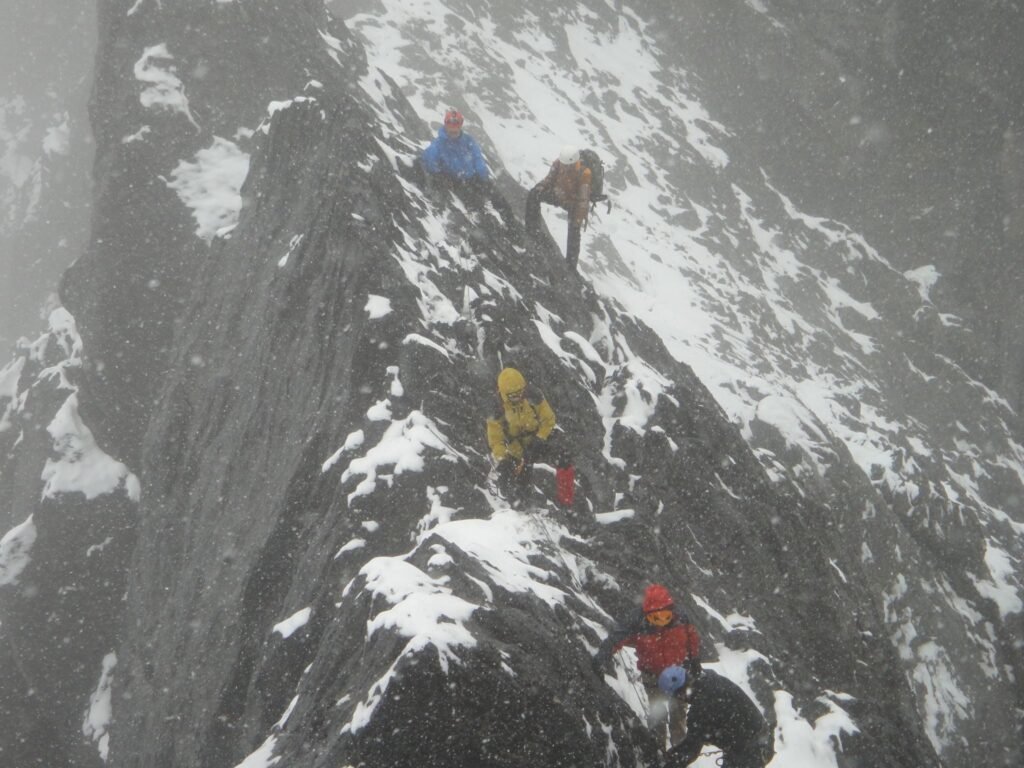
Mountaineering is the highest and most complex discipline. It combines rock climbing, rope work, altitude management, glacier travel (in some mountains), and firsthand survival skills. This is where technical training becomes essential. Mountaineering requires rope skills, knots, harnesses, exposure to cliffs, rock faces, and risky terrain, advanced climbing techniques, altitude experience, high-stakes decision-making and safety awareness. Carstensz Pyramid is not a simple trekking peak, it’s a technical rock climb with fixed ropes, vertical sections, and exposed ridge crossings. This places the mountain firmly in the mountaineering category.
So… Which Skill Matters Most for Carstensz Pyramid?
Mountaineering. 100%.
While trekking endurance is important for the approach, the real challenge of Carstensz is on the final ascent. The mountain’s limestone cliffs, vertical walls, and Tyrolean rope traverses require confidence with harnesses and carabiners especially with proper footwork, rope safety, and basic technical skills.Without mountaineering experience, reaching the summit safely becomes extremely difficult and risky.
Trekking comes second. The journey to basecamp (depending on access method) still demands stamina and mental resilience, especially through the highlands of Papua.
Hiking is the least relevant. It helps build general fitness, but it does not prepare you for the technical demands of Carstensz.
Carstensz Pyramid is a rare mountain that blends jungle trekking with true high-altitude, technical mountaineering.
To climb it safely and successfully, you must approach it like a mountaineer, supported by solid trekking endurance, not just as a hiker.
The stronger your mountaineering foundation, the closer you are to touching the summit ridge of one of the world’s most iconic Seven Summits.