

Essential Rope Skills for Climbing Carstensz Pyramid
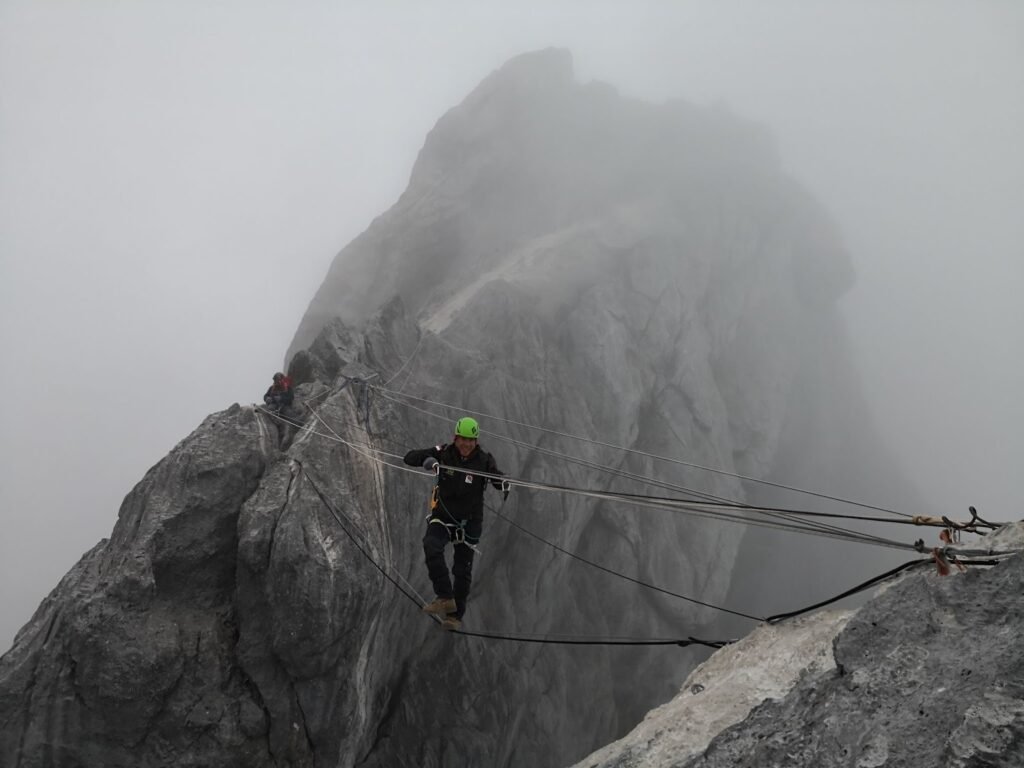
Carstensz Pyramid, also known as Puncak Jaya, is one of the most challenging mountains in Indonesia and a destination that demands advanced technical skills. Standing at 4,884 meters above sea level in the highlands of Papua, Carstensz is not a typical trekking peak. Its limestone cliffs, exposed ridges, unpredictable weather, and glacier crossings require climbers to master various rope skills to ensure safety and efficiency during the ascent and descent.
1. Basic Knot-Tying Skills
Knot mastery is fundamental for any Carstensz expedition. Climbers must be proficient in knots such as the figure-eight knot, double fisherman’s knot, clove hitch, and bowline. These knots are used for tying into the rope, securing anchors, adjusting tension, and connecting ropes. A single mistake in knot tying can result in serious accidents, making precision and routine practice essential.
2. Belaying Techniques
Belaying is a critical skill during Carstensz climbs, especially on steep limestone sections and exposed traverses. Climbers need to understand top belay, bottom belay, and fixed belay systems. Proper belaying ensures that a climber is protected from falls and can safely navigate vertical or semi-vertical terrain. Effective communication between climber and belayer is also crucial in high-wind and low-visibility conditions.
3. Rappelling (Abseiling)
Descending Carstensz Pyramid often involves multiple rappels, some of which are long and exposed. Climbers must be skilled in rappelling techniques, including device setup, brake control, backup systems, and rope management. Understanding how to deal with rope tangles, stuck ropes, and emergency self-rescue situations is vital in the remote environment of Carstensz.
4. Fixed Rope Ascending
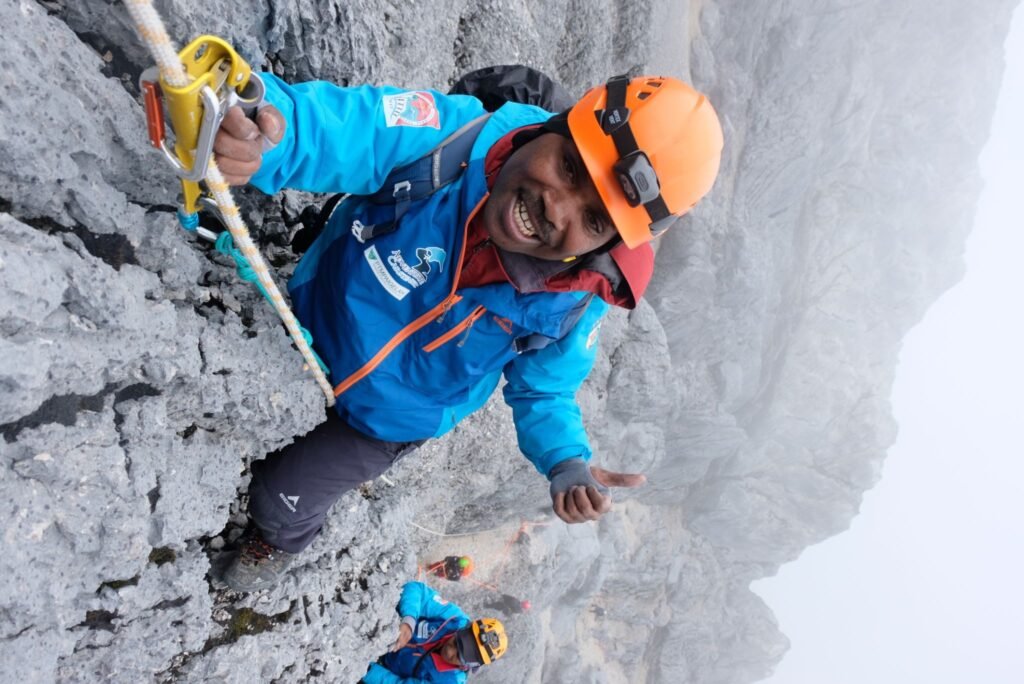
Certain sections of Carstensz require climbers to ascend using fixed ropes. Skills such as using jumars (ascenders), cow’s tails, and safety lanyards are necessary to move efficiently and safely. Climbers must also know how to transition smoothly between ascending, traversing, and descending fixed lines without unclipping from the system.
5. Anchor Building and Rope Protection
Building reliable anchors is essential on Carstensz’s limestone rock. Climbers should understand how to use natural anchors, bolts, slings, and carabiners to create secure systems. Additionally, rope protection techniques are needed to prevent abrasion on sharp limestone edges, which can severely damage ropes.
6. Glacier Rope Travel and Crevasse Safety
Although the glaciers of Carstensz are rapidly retreating, rope travel on icy terrain is still required in some routes. Climbers must know glacier rope techniques, proper spacing, and crevasse rescue basics. These skills reduce the risk of accidents when crossing snow or ice-covered sections.
7. Team Rope Management and Communication
Efficient rope management within the team is essential for a successful summit attempt. This includes coil management, avoiding rope drag, maintaining proper spacing, and clear verbal commands. In extreme weather and high-altitude conditions, effective communication can be as important as technical skill.
Climbing Carstensz Pyramid is a serious mountaineering endeavor that demands strong rope skills and technical competence. Mastery of knot tying, belaying, rappelling, fixed rope techniques, anchor building, and glacier safety is not optional—it is a necessity. With proper training, preparation, and respect for the mountain’s challenges, climbers can significantly reduce risks and experience one of the most iconic and demanding climbs in Southeast Asia.