

Central Papua, Timika — As the sun begins its descent toward the west and the biting cold of the Sudirman Mountains intensifies, Carstensz Peak presents a scene that is nearly unrivaled: one of the most breathtaking sunsets at the roof of Indonesia. At an elevation of more than 4,800 meters above sea level, the late afternoon is not merely the closing of a day’s climb, but a sacred moment that leaves one speechless.
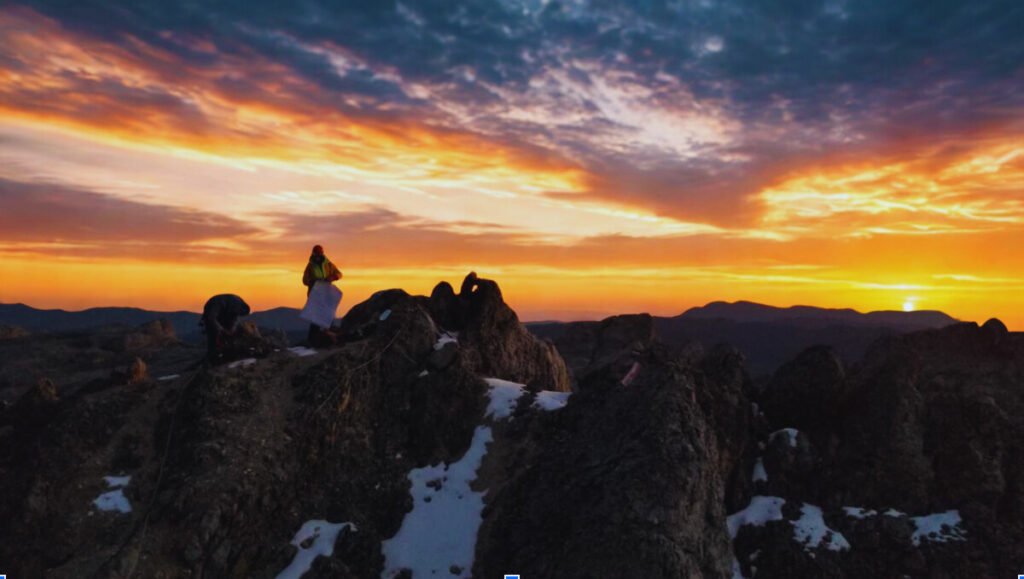
The sky slowly transforms in color. Pale blue shifts into golden orange, then blends with soft shades of pink reflected off the limestone cliffs and the stretches of eternal ice. The sunset light touches the sharp ridges of Carstensz like a natural painting crafted with immeasurable patience. Within minutes, the atmosphere changes—silent, majestic, and filled with reverence.
From this height, clouds appear to drift gently beneath the climbers’ feet, as if Carstensz stands between two worlds: the harsh earth and the boundless sky. There is no noise, no trace of civilization’s bustle. Only the whisper of the wind and the pounding of one’s heartbeat remain, a reminder of how small humans are in the presence of nature.
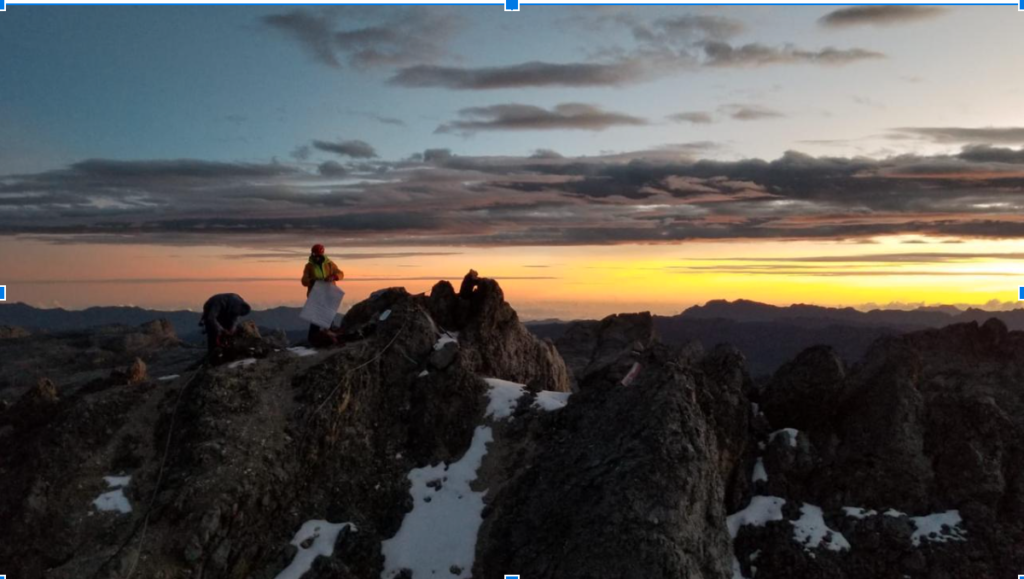
For climbers and local guides alike, sunset at Carstensz Peak is a reward after a long struggle. Steep routes, extreme weather, and limited oxygen are repaid in full by a panorama found nowhere else in Indonesia—and perhaps nowhere else in the world. On the equator, in a tropical land, sunset exists side by side with ice and snow, creating a contrast that seems impossible, yet is undeniably real.
When the sun finally disappears behind the mountains, the cold grows sharper. Yet the warmth of the sunset lingers in memory. Once again, Carstensz Peak proves itself not only as a physical challenge, but also as a space for contemplation—a place where natural beauty reaches its summit. The sunset here has no equal; it stands alone, majestic and eternal. (AC)