

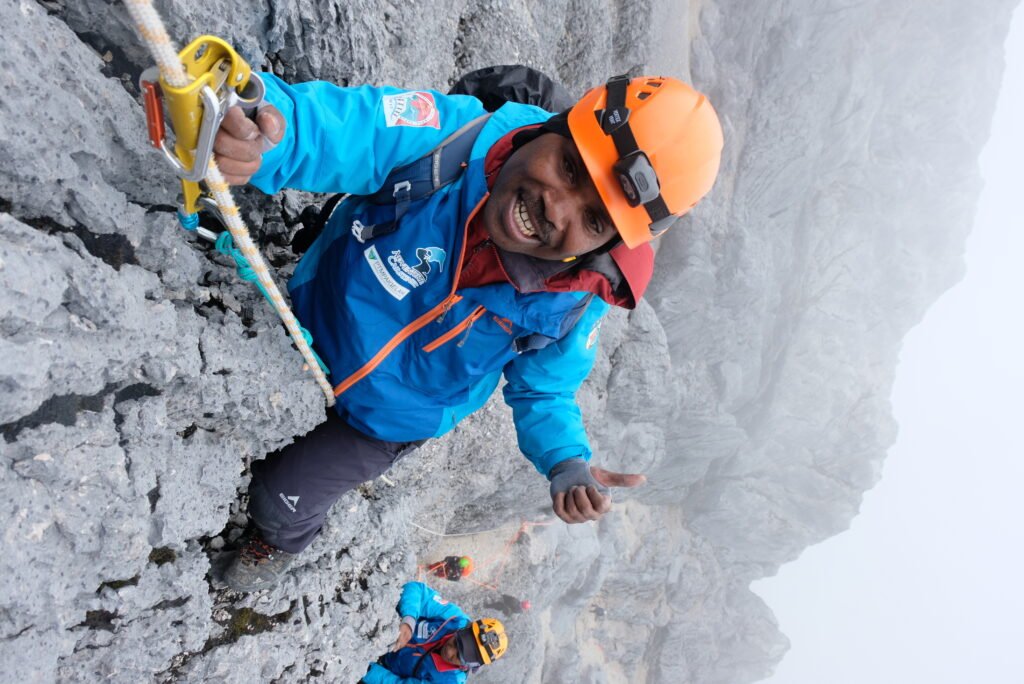
In today’s climbing world, rock climbing and ice climbing are often combined into a single category called “climbing.” However, these two types of climbing have very different technical bases, risks, and equipment. These differences become very clear on the Carstensz Pyramid expedition, a technical mountain with challenging limestone cliffs, located in an area that was once covered in tropical snow.
Although climbing on Carstensz is now entirely focused on rock climbing, many climbers accustomed to snow-covered mountains abroad still question the differences in equipment between rock and ice climbing. The following report will explain the basic differences between these two disciplines.
The difference in equipment cannot be separated from the nature of the terrain.
- Rock climbing takes place on rock: limestone, granite, basalt, or metamorphic rock. The main focus is on friction, grip, and safety systems that attach to hard surfaces.
- Ice climbing deals with frozen ice: frozen waterfalls, glaciers, and even hard snow walls (seracs). This terrain is fragile and constantly changing, so gear must be able to anchor, bite, and withstand pressure on unstable material.
These differences in terrain make it impossible for equipment to be interchangeable.
Shoes: Rubber Soles versus Steel Soles
- Rock Climbing
Rock climbing shoes are equipped with highly sticky and elastic rubber soles. Their function is to increase grip and help climbers “feel” the rock, from small edges to scraping on flat surfaces.
- Ice Climbing
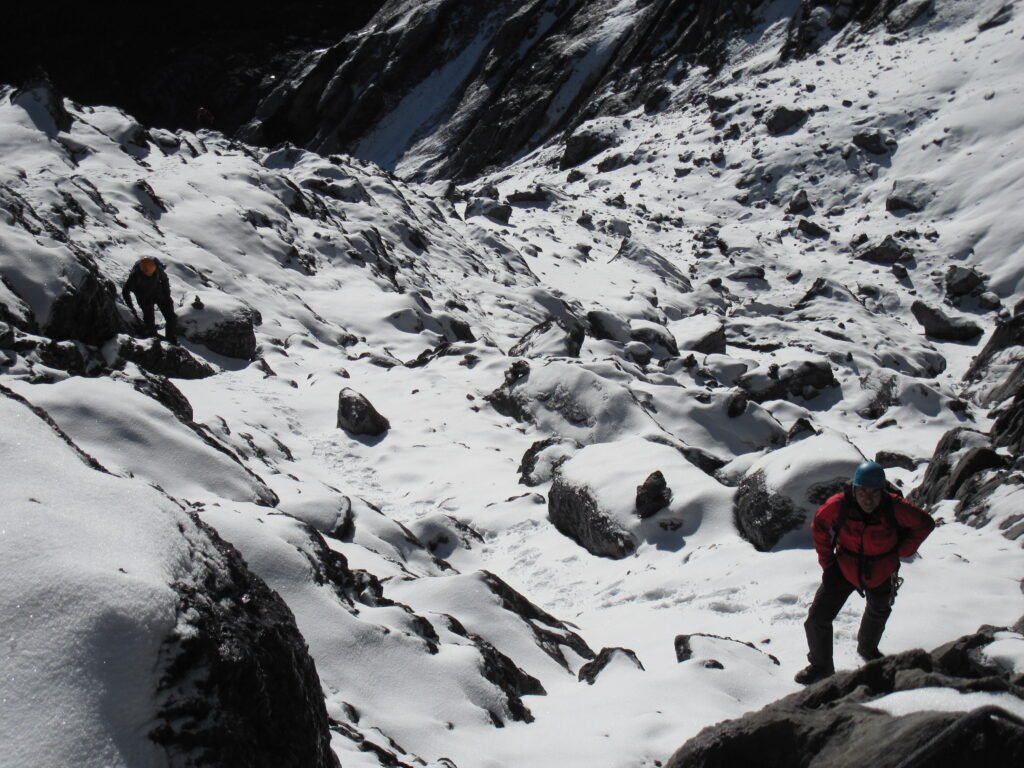
Ice climbing shoes are designed to be hard and have thick insulation layers. The bottom is made to be used with crampons, tools that allow climbers to dig metal teeth into the ice.
The two are at opposite ends of the spectrum one relies on feel, while the other focuses on stability and warmth.
Primary Tools: Hands vs. Metal Accessories
- Harness & Safety System
Basic equipment such as harnesses, carabiners, and helmets are the same. However, their use is not identical. In rock climbing, climbers often use quickdraws to attach ropes to anchors on bolting or trad gear. In ice climbing, anchors are often made from ice screws, which require skill to place without damaging the ice structure.
- Ice Tools vs. Bare Hands
Rock climbing relies on bare hands. Every hold on the rock is part of the technique. Ice climbing uses two ice tools, small ice axes that serve to grip, pull, or spike the ice wall. Without these tools, climbing is nearly impossible.
One of the most striking differences is the presence of crampons, metal spikes attached to ice climbing boots. Crampons provide traction on ice, allowing climbers to stand on vertical or sloping surfaces.
In rock climbing, crampons are not only unnecessary, they are dangerous. The metal spikes can damage ropes, injure other climbers, or destroy fragile rock surfaces.
Why Carstensz Doesn’t Need Ice Climbing Gear
Although Carstensz Pyramid once had a large glacier, tropical climate change has caused its ice surface to continuously shrink. Now, the climb is done entirely with rock climbing techniques and equipment.
Although the equipment used is different, rock climbing and ice climbing share a similar spirit: the courage to conquer gravity and the sometimes hostile elements of nature.
Rock climbing tests your skills and confidence when facing rocks.
Ice climbing tests your physical endurance in extremely cold temperatures and on unstable surfaces.
For climbers around the world, learning both types of climbing means realizing that every mountain including Carstensz has a unique story that can only be read with the right equipment.