

Situated at over 4,000 meters above sea level, Yellow Valley is a key part of the hiking trail to the summit of Carstensz Pyramid—the highest point in Indonesia and Oceania. The valley’s unique natural features make it a natural laboratory of high geographical and ecological value.
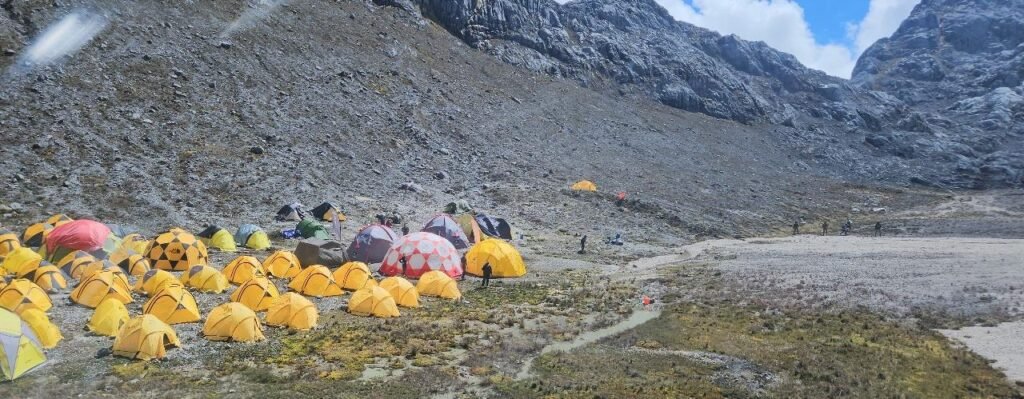
Yellow Valley Located in the Sudirman Mountains, part of the Maoke Mountains in Central Papua Province, Indonesia, the valley lies at an altitude of approximately 4,200 to 4,300 meters above sea level, just a few kilometers from Puncak Jaya (4,884 meters above sea level), the highest mountain in Indonesia and Oceania.
To get to this area, access is quite difficult and extreme.
The main route starts from Timika, followed by a helicopter flight to the basecamp, or a multi-day trek along a traditional route from Sugapa or Ilaga village. Unpredictable weather, thick fog, and rocky terrain make the journey to Yellow Valley a highly challenging physical and mental experience.
According to Madison Mountaineering expedition records (2025), temperatures in this area can drop below 0°C at night, with heavy rainfall and fog almost always present throughout the year.
Geographically, the Yellow Valley was formed by the shifting of the earth’s plates between the Australian Plate and the Pacific Plate millions of years ago. This tectonic event formed the Sudirman Mountains, including Puncak Jaya and the surrounding valleys.
Geologically, the area is composed primarily of very old marine sedimentary rocks, such as limestone and shale. This indicates that this area was once a seabed. The gradual uplift process created distinctive karst landforms, such as sharp cliffs, caves, and deep ravines.
In addition, Yellow Valley is also a former valley formed by the activity of tropical glaciers that once covered most of Carstensz Peak.
However, the glacier is now rapidly retreating due to global climate change. According to a 2024 report by the World Glacier Monitoring Service, the Carstensz Glacier has decreased by more than 85% since the 1970s and is predicted to disappear completely before 2035 if global warming trends remain unchanged.
Ecosystem around Yellow Valley The ecosystem around the Yellow Valley exhibits characteristics of the tropical alpine zone, a type of ecosystem rarely found in many parts of the world, such as the Andes, the
Rwenzori in Africa, and Papua.
In this area, the plants that grow are limited to alpine grasses, lichens, and small-leaved plants that can survive in cold temperatures and rocky soil.
When the altitude reaches below 3,800 meters, thick forests of Ericaceae and moss begin to be found, this marks the transition from a mountain forest ecosystem to the alpine zone. Several studies by LIPI (now BRIN, 2024) found that insect and bird species in the Sudirman Mountains show extraordinary adaptability to low-oxygen and cold-temperature environments.
For example, endemic birds such as the Papuan grassbird and several types of honeyeaters are able to survive at altitudes of more than 3,500 meters above sea level — an altitude that is very difficult for other animals in tropical regions to reach.
Yellow Valley It’s not just a resting place for climbers planning to climb Carstensz Peak. It’s a natural learning ground about how the Earth works, how mountains form from the ocean floor, how glaciers slowly disappear, and how life can survive in extremely cold temperatures.
Standing there makes anyone feel so small, yet closer to nature. From slowly descending clouds to limestone rocks that hold stories from millions of years ago, each thing reminds us to respect what we admire.
So, when one day you arrive at Yellow Valley, enjoy its silence with respect. Bring home stories, not traces of destruction. Because Papua’s natural beauty will remain as long as we work together to protect it.