

Papua is famous for being home to thousands of species of animals and plants that are only found there. One of the most unique and mysterious animals in Papua is the dingiso. To people outside of Papua, this name may sound strange, but to the local indigenous people, dingiso is part of their culture and a symbol of local wisdom. But unfortunately, this rare animal is now endangered.
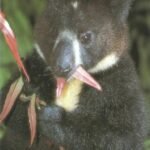
Dingiso has the scientific name Dendrolagus mbaiso and belongs to the tree kangaroo family. Unlike other kangaroos that live on the Australian plains, dingiso live in the Papuan mountain forest at an altitude of more than 3,000 meters above sea level.
Its body shape is quite unique, having deep black fur with white patches around the abdomen, face, and tail. This color combination has often led to it being referred to as a “panda kangaroo” by foreign researchers. The body length of the dingiso can reach about 70 to 80 centimeters, and its tail is actually longer than its own body, which serves to help maintain balance when moving in trees.
Dingiso also have a shy nature and rarely appear on the surface, making them very difficult to find in the wild. Even scientists need months to be able to observe and record its behavior.
The Role of Preservation
Various efforts have been made to protect dingiso. The Indonesian government has included this animal in the list of protected animals. International conservation agencies also pay great attention, as the dingiso is the only tree kangaroo in the mountains. In addition, the role of indigenous peoples is very important in maintaining the existence of dingiso.
In some areas, customary rules strictly prohibit hunting these animals. The approach based on local wisdom has proven effective, as communities feel that they have direct responsibility for the forest and its contents.
In addition, research continues to be conducted to understand the behavior of dingiso. Scientific data is very important so that conservation strategies can be more targeted, especially in determining forest areas that must be protected.