

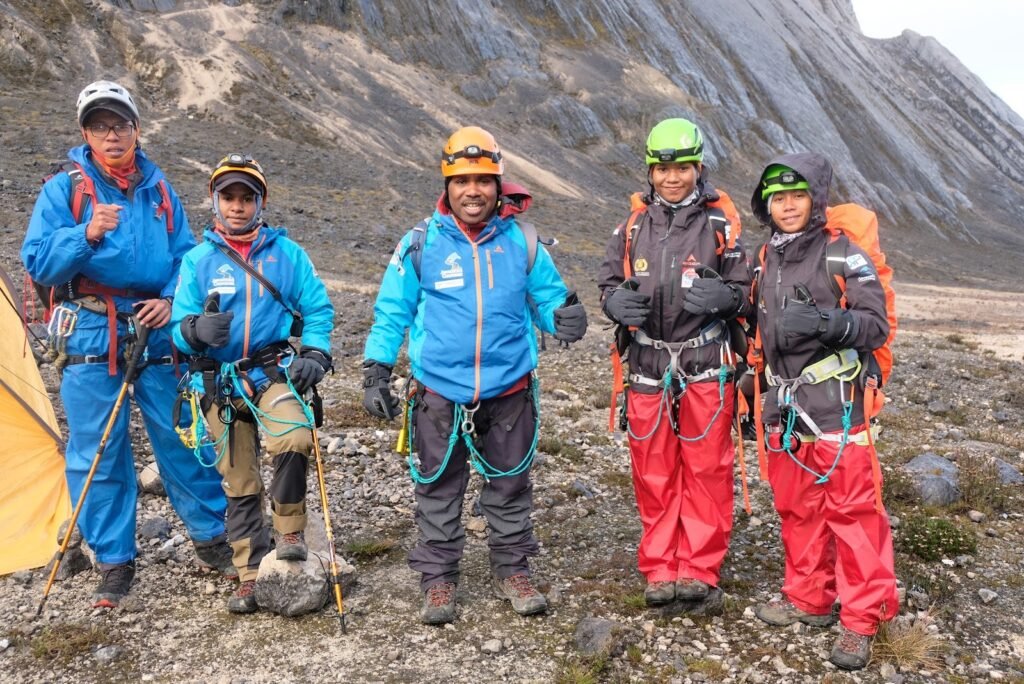
Climbing Mount Carstensz is not just about reaching Indonesia’s highest peak. It’s also about understanding ethics, respecting local culture, and taking care of the environment in Papua’s traditional lands. This mountain is surrounded by communities that have preserved their traditions for generations, so anyone who visits should approach it as a guest who respects local rules and ways of life.
Respecting local customs is a big part of the journey. The Dani, Damal, and Moni communities have their own ways of doing things, from how visitors interact to rules about taking photos. Hikers should always ask before entering villages, avoid taking pictures without permission, and stay polite in every interaction. Simple gestures like these show respect and also help create a safe and comfortable experience for everyone.
Taking care of the environment is equally important. Carstensz’s ecosystem is delicate, including its tropical glaciers that are shrinking because of climate change. That’s why hikers need to follow the “Leave No Trace” principle. Don’t leave trash behind, avoid damaging plants, keep campsites clean, and stick to official trails. Small actions like bringing back your own waste or using a refillable water bottle can make a big difference in keeping Carstensz beautiful.
Hikers also get to see first-hand the changes happening in this region. From shrinking glaciers to unpredictable weather, these experiences are powerful learning moments. Sharing these stories with others helps raise awareness about the importance of protecting Papua’s nature.
At the end of the day, climbing Carstensz is more than just a challenging hike. It’s a journey of understanding values that matter in life. By respecting local customs, protecting the environment, and acting responsibly, climbers not only enjoy an amazing adventure but also contribute to preserving one of the world’s most precious natural wonders.