

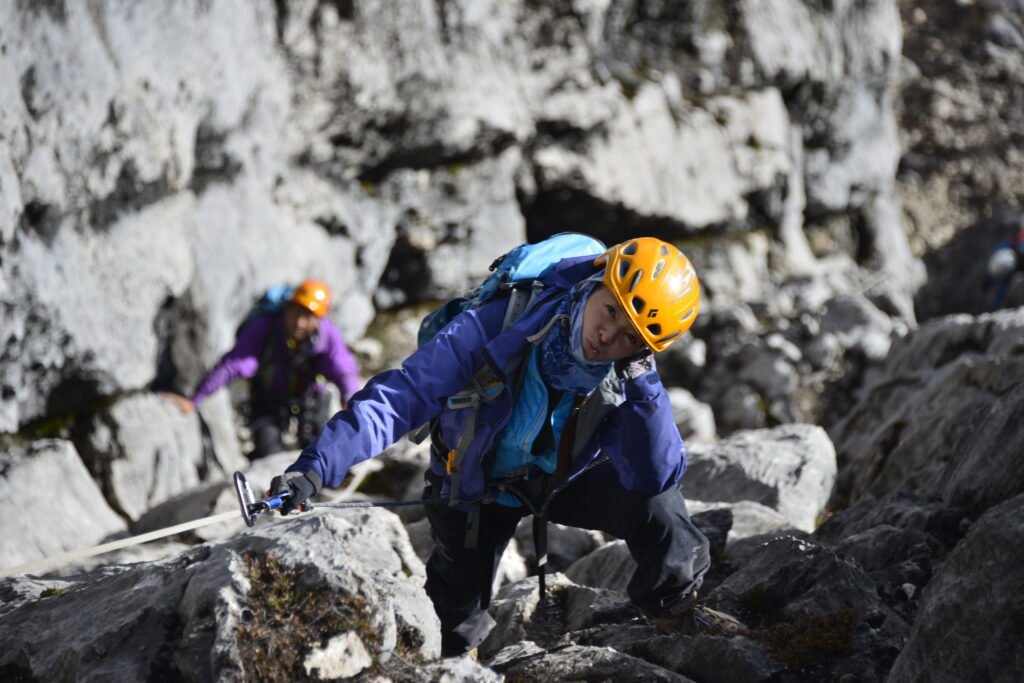
Climbing Carstensz Pyramid, Indonesia’s highest peak and one of the Seven Summits, requires strict adherence to safety procedures. With its karst terrain, extreme weather, and technical sections such as the tyrolean traverse and skywalk, every climber must follow established safety standards to ensure a safe and controlled expedition.
1. Pre-Climb Safety Briefing
Before the ascent, all climbers join a comprehensive safety briefing led by certified technical guides. The session includes proper use of technical gear such as harnesses, carabiners, ascenders, descenders, dynamic ropes, anchor systems, and helmets. Guides also explain key sections of the Carstensz route including karst gaps, vertical walls, slippery moss areas, exposed zones, tyrolean traverse, and skywalk. Standard communication codes and radio use are also introduced.
2. Mandatory Gear Check
All expeditions conduct a full gear check before trekking begins. Climbers must bring UIAA-approved equipment including climbing helmets, gloves, high-ankle boots, headlamps, waterproof layers, thermal layers, rain covers, and dry bags. Guides inspect carabiners, ropes, harnesses, ascenders, descenders, and operator anchor points to ensure everything is in proper condition.
3. Buddy System Implementation
The buddy system is a key safety protocol. Climbers must not move alone, especially in steep areas, karst terrain, foggy zones, or tyrolean sections. Each pair checks each other’s harness, carabiners, and rope attachments, and any issue must be reported immediately.
4. Guide-Controlled Climbing Pace
Guides set the climbing speed, rest duration, safe resting points, and rhythm adjustments based on weather conditions. No one is allowed to move ahead of the guide or leave the group. At elevations above 4,000 meters, climbers must slow their pace, regulate breathing, stay hydrated, and avoid excessive physical strain to prevent altitude sickness.
5. Safety on Technical Sections
The tyrolean traverse and skywalk require strict procedures. Climbers must clip carabiners correctly to the safety line, maintain stable body positioning, follow guide instructions, and pass the route one at a time. On the skywalk, climbers stay on the fixed rope, maintain a safe distance, and move slowly with three points of contact.
6. Weather Monitoring and Summit Decisions
Weather in Carstensz can change rapidly. Guides monitor cloud patterns, visibility, and rainfall continuously. Summit pushes may be delayed if conditions such as strong winds, storms, heavy fog, or heavy rain occur. Guide decisions are final for group safety.
7. Emergency Procedures
In emergencies, the guide stops the climb immediately. This includes severe altitude sickness, hypothermia, leg injuries, or decreased consciousness. Guides provide first aid such as warming, portable oxygen, injury stabilization, and warm fluids. Unstable climbers must descend to lower altitude, return to basecamp, or wait for helicopter evacuation depending on conditions.
Climbing Carstensz is not only a physical challenge but also a mission that requires discipline, safety awareness, and teamwork. By following these mandatory safety procedures, climbers can experience a journey that is both challenging and safe, ensuring they reach the summit and return with unforgettable memories.